Designed to miss it
👋🏼
Continuous signals but intermittent hardware
At any given moment, the body is doing something measurable.
A glucose concentration shifting in the interstitial fluid beneath the skin. A troponin level edging upward in the bloodstream, flagging stress on heart muscle that won’t show up in an echo for weeks. The signal is continuous, hardware built to capture it is not. A blood draw happens once, in a clinic, on a schedule that has more to do with appointment availability than with what the body is actually doing. The gap between what the body is broadcasting and what can actually read isn’t a chemistry problem but an capturing through an object problem.
The skin as interface
The skin sweats, flexes, sheds cells continuously and changes pH depending on exertion, stress and hydration state. It is also where the most promising metabolic monitoring hardware needs to live because the biofluid closest to the surface, sweat and interstitial fluid , carries real diagnostic signal. Glucose in interstitial fluid tracks blood glucose with a lag of roughly 5 to 10 min. Lactate in sweat reflects metabolic stress during physical exertion. Cortisol, detectable in sweat, maps to systemic stress load in ways that a single clinic visit never could.
The design problem is what it meant to build something that reads those signals continuously, on a surface that is actively working against adhesion.
a wearable electromechanical sensor is a material selection problem, a geometry problem, and a manufacturing problem, all happening simultaneously. the substrate has to flex without delaminating the sensing electrode. The adhesive has to maintain contact through sweat to the sensing surface have to be small enough to fill by capillary action alone, which means channel geometry is load-bearing in a way that has nothing to do with electronics. The whole assembly has to be manufacturable at a scale and cost that makes it viable outside a research lab.
The point-of-care object
Troponin is released into the bloodstream when cardiac muscle cells are under stress or dying. A rising troponin level is how emergency physicians confirm a heart attack. It is also how oncologist track whether a chemotherapy regimen is quietly damaging a patient’s heart, a side effect common enough to have its own subspeciality, cardio-oncology, built around managing it.
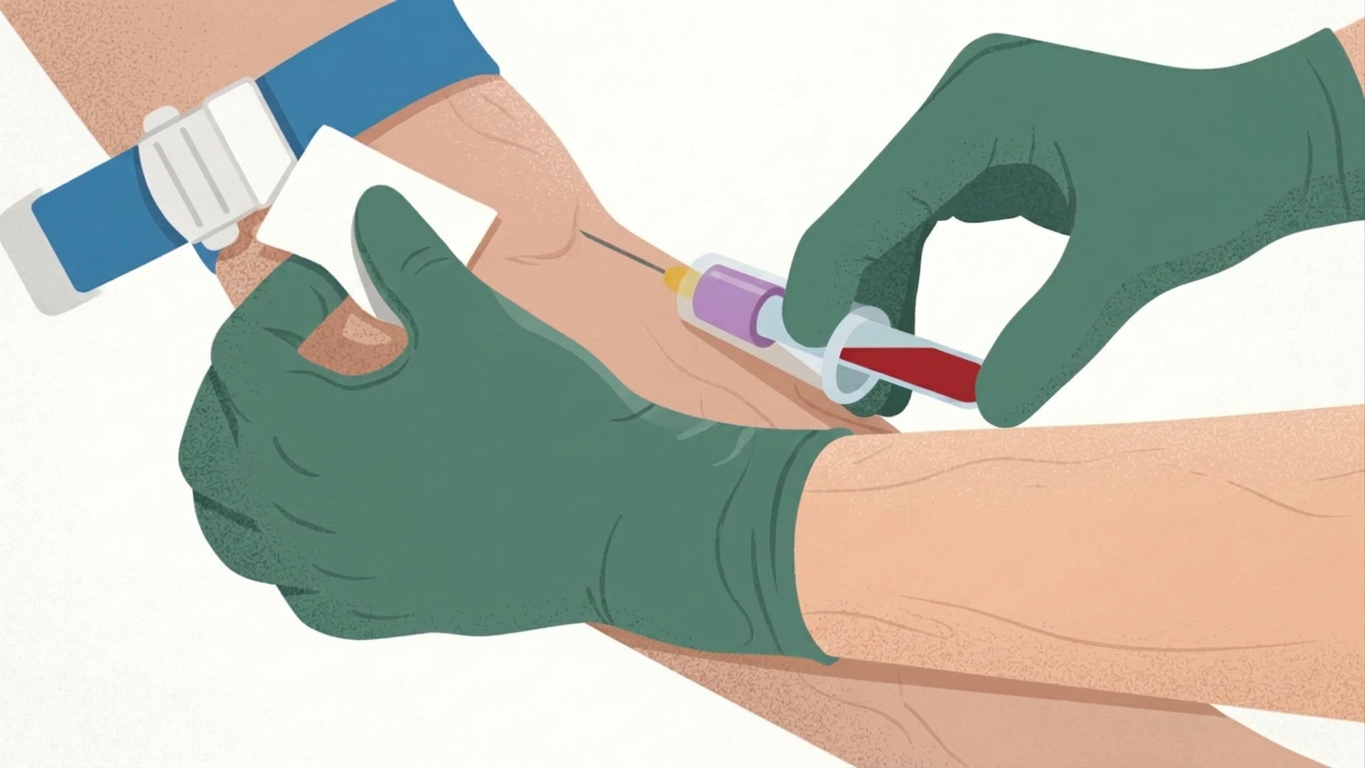
The current detection method is blood draw, processed in a lab. For an acute MI in an emergency department, that workflow is appropriate and for a chemotherapy patient being monitored over six months of treatment at home, it is a design mismatch. The signal needs to be tracked longitudinally, trending over weeks, not read once at a threshold. The object built to capture it hasn’t caught up with that use case. The design brief for a home troponin reader is specific and unforgiving. The lancet has to be operable with one hand, without dexterity assumptions. Sample handling getting a precise volume of blood onto a test strip without error has to account for shaking hands, anxiety, and the lightning conditions of a home at 7am. the readout cant return a number without context. A a very small troponin value means nothing to a non-clinician but would make a difference is communicating a trend and signal when to act. This gap in display of information is one of the design problems. Hospital grade point of care devices are legible responses to clinical environments. Those decisions don’t translate to home use. The person using this device isn’t a paramedic running a checklist. they are someone trying to stay well, doing something difficult alone. The object should be designed around that reality not retrofitted from a device built for a different user in a different room.
Both of these are solvable problems but what’s missing is the sustained design attention that takes a known signal and builds an object worthy of it.
ISF glucose lag time 5–6 min Basu, R., et al. (2013). Time lag of glucose from intravascular to interstitial compartment in humans. Diabetes, 62(12), 4083–4087. https://doi.org/10.2337/db13-1132
Sweat carries lactate, cortisol as diagnostic markers Min, J., et al. (2023). Opportunities and challenges for sweat-based monitoring of metabolic syndrome via wearable technologies. Communications Engineering, 2, 43. https://doi.org/10.1038/s44172-023-00097-w
Substrate flexibility, delamination, microfluidic channel geometry as manufacturing constraints Shin, S., et al. (2025). A bioinspired microfluidic wearable sensor for multiday sweat sampling, transport, and metabolic analysis. Science Advances.https://doi.org/10.1126/sciadv.adw902